


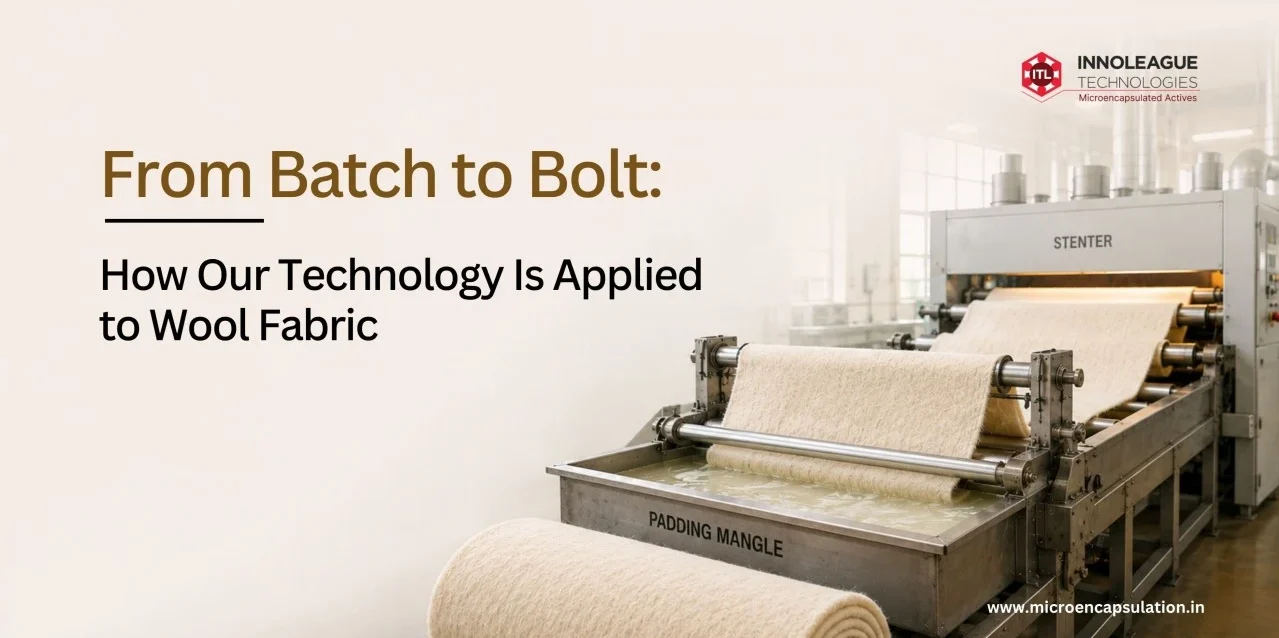
One of the most practical questions we receive from wool processors and textile finishers is: how does this actually get onto the fabric, and does it require new equipment? The answer is reassuring. At Innoleague Technologies India Pvt Ltd, our encapsulated…

Cooling That Activates with Every Move
Cooling intimate wear isn’t about adding menthol. It’s about releasing it at the right moment. Sometimes it is not about menthol at all. A garment that delivers a cooling sensation only when you move—that’s the promise of rub-release menthol microcapsules applied…
The Sustainability Story: Why This Matters Beyond Efficacy
In the textile industry, sustainability is easy to claim and hard to substantiate. At Innoleague Technologies India Pvt Ltd, we want to be specific about the environmental and safety profile of our encapsulated moth-control technology — as today the details matter,…
Going Global: Innoleague’s Work Towards Woolmark Alignment
The Woolmark Company is the global authority on wool quality, performance, and certification. For any functional finish technology targeting the premium wool market whether in apparel, interior textiles, or technical applications alignment with Woolmark’s performance and chemical standards is not optional….
A Landmark Partnership: Innoleague × Wool Research Association of India
We are pleased to share that Innoleague Technologies India Pvt Ltd is collaborating with the Wool Research Association of India (WRA), Thane, to develop and validate our encapsulated moth-control technology for wool textiles. The Wool Research Association is India’s premier technical…
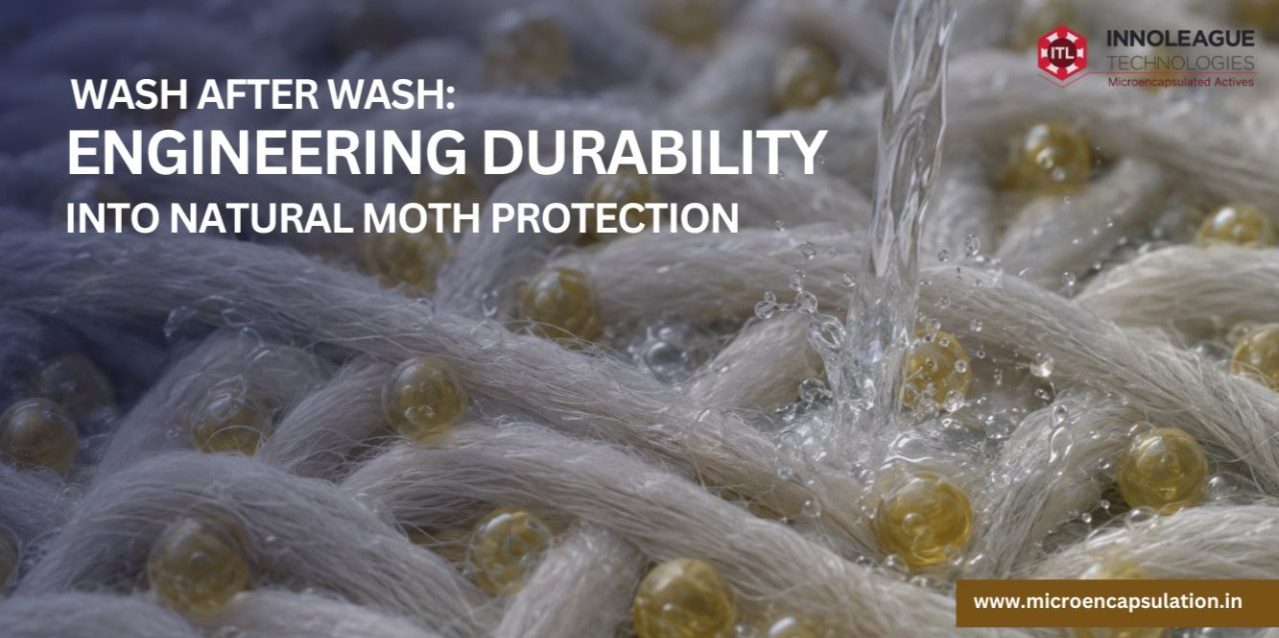
Wash After Wash: Engineering Durability into Natural Moth Protection
Ask any textile finisher to name the hardest challenge in functional finishes, and wash durability will be at the top of every list. For moth protection specifically, the commercial benchmark is 20 to 30 wash cycles a standard that most natural…
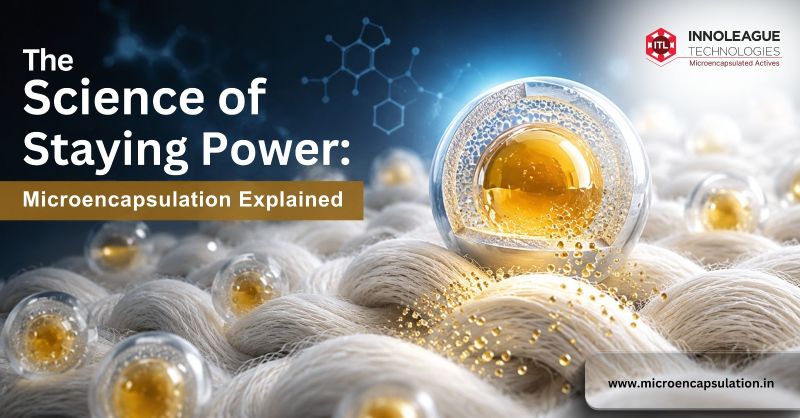
The Science of Staying Power: Microencapsulation Explained
If you ask why most natural moth repellents fail in commercial textile applications, the answer almost always comes down to one word: durability.Essential oils from neem, cedarwood, lavender, and tobacco leaf have well-established repellent and insecticidal properties against clothes moths and…
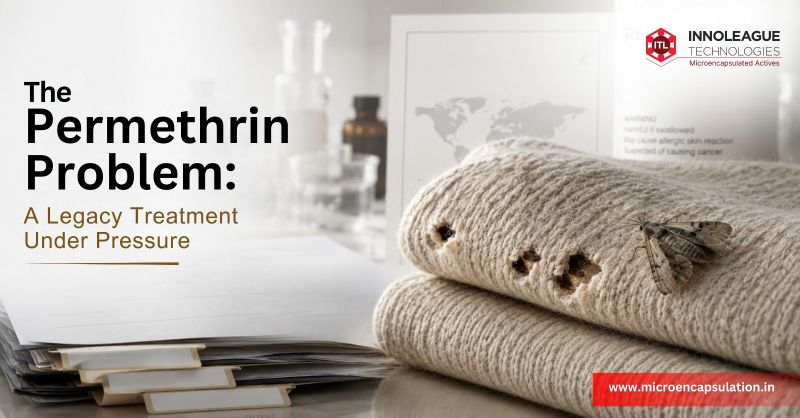
The Permethrin Problem: A Legacy Treatment Under Pressure
For decades, permethrin has been the default chemical for moth-proofing wool. Effective, inexpensive, easy to apply — it became an industry standard almost by default. But the global textile industry is confronting an increasingly uncomfortable truth: permethrin’s dominance may be drawing…
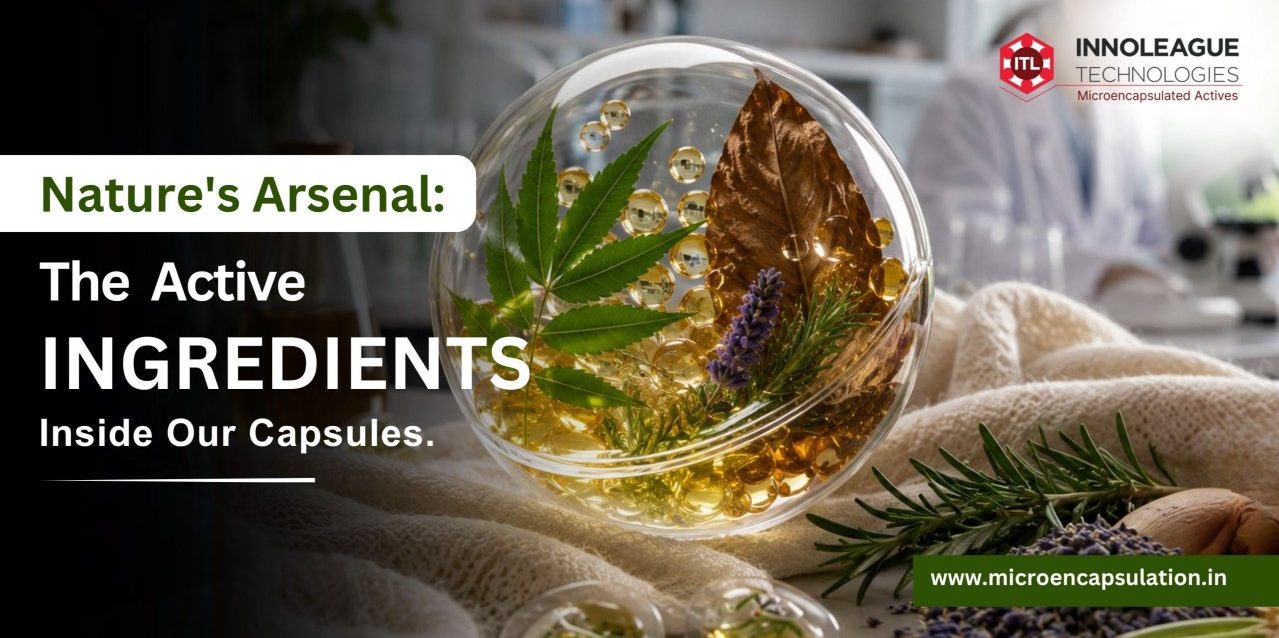
Nature’s Arsenal: The Active Ingredients Inside Our Capsules
The natural world has been solving the moth problem long before synthetic chemistry existed. Plants toxic or repellent to insects evolved over millions of years and the compounds responsible for that activity are now among the most rigorously studied in green…
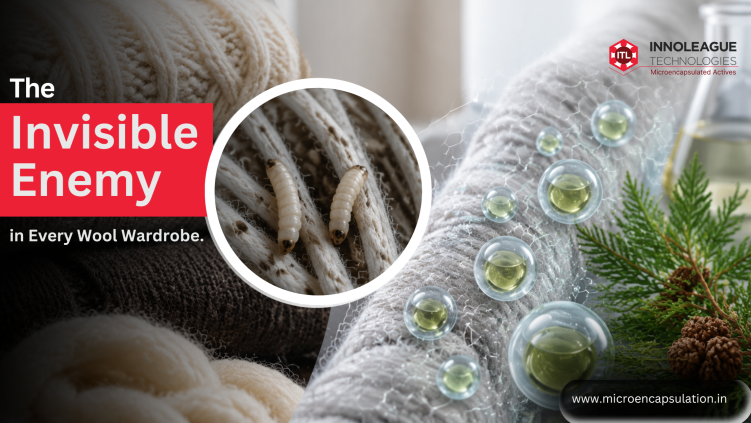
The Invisible Enemy in Every Wool Wardrobe
Every year, the global wool industry loses hundreds of millions of dollars to an enemy so small it is invisible to the naked eye the clothes moth. Tineola bisselliella, the common clothes moth, does not eat your finest cashmere itself. Its…