


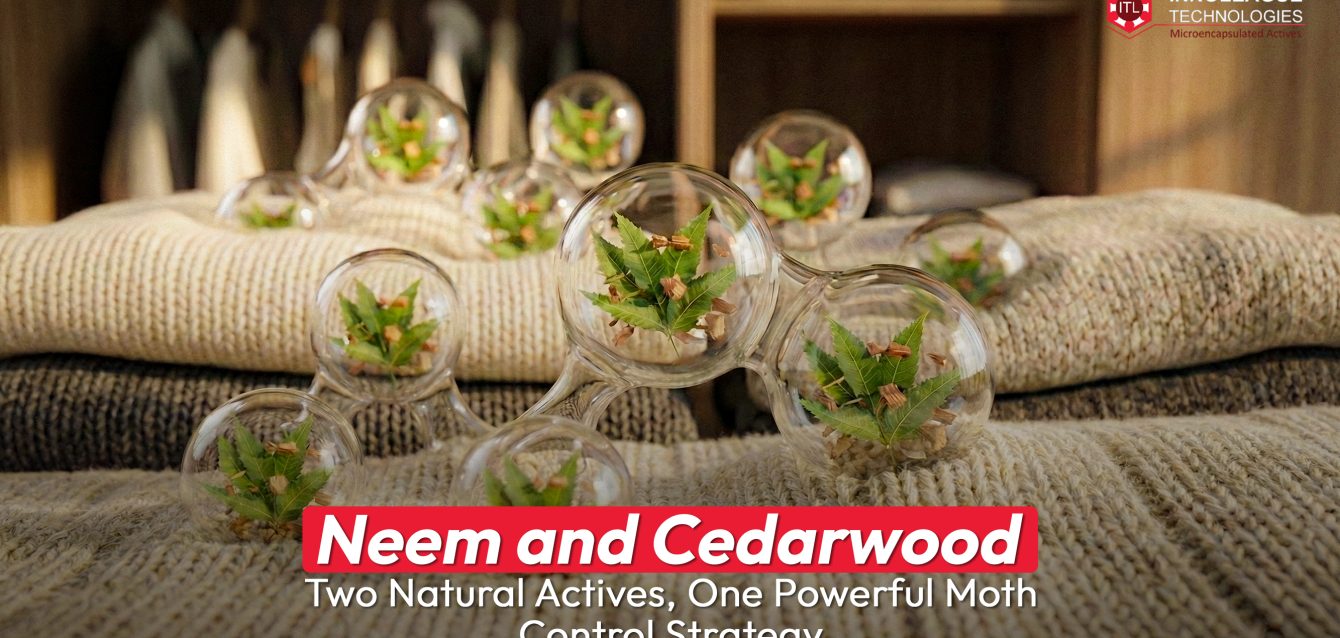
In an era where sustainability and efficacy are highly valued, plant-based pest management techniques are gaining favour. Among these, neem and cedarwood essential oils stand out for their complementary insect-repellent characteristics, providing a natural, environmentally acceptable alternative to synthetic moth control agents. When paired with sophisticated formulation methods such as microencapsulation, these botanicals offer long-term protection while improving performance.
The Science Behind Neem and Cedarwood
Neem oil is rich in bioactive compounds that disrupt insect feeding, reproduction, and life-cycle progression. Its multi-modal action makes it effective against a variety of insect pests, including moths and other lepidopteran species, because it acts as both a repellent and an insect growth regulator.
Cedarwood essential oil, on the other hand, is valued for its potent, woody aroma, which naturally repels insects by interfering with their pheromone communication and nervous system responses. This makes it particularly useful in moth-repellent applications.
By combining these actives, products can target pests via multiple biological pathways, reducing both feeding and settlement, thereby increasing overall repellency.
Why Microencapsulation Matters
Plant-derived oils, such as neem and cedarwood, are naturally volatile and can deteriorate rapidly when exposed to air, heat, or light. Microencapsulation technology is critical in this regard. Microencapsulation stabilises active chemicals by enclosing them in microscopic shells, controls their release over time, and considerably extends their useful life. This controlled, slow release contributes to consistent repellency without the need for frequent reapplication, which is a critical requirement for dependable, real-world moth control solutions.
Microencapsulation Solutions at Innoleague Technologies offers encapsulated botanical actives, including neem, for controlled-release pest management. These products https://www.microencapsulation.in/products/ combine material science and formulation knowledge to convert traditional botanical compounds into high-performance chemicals appropriate for textiles, home care, and speciality chemical applications.
Aligning with Modern Expectations
Modern customers and industries are increasingly looking for products that are not only effective but also safe, sustainable, and ecologically friendly. Natural actives like neem and cedarwood encapsulated in sophisticated delivery technologies meet these expectations by providing botanical pest repellent without harsh synthetic chemicals.
By combining neem and cedarwood with microencapsulation technology, manufacturers may provide pest control solutions that are more dependable, long-lasting, and better suited to today’s environmental goals. Whether for textile mothproofing, home interiors, or packaging applications, plant-based treatments are a huge step forward in environmentally friendly pest management. Visit https://www.microencapsulation.in/technology/ to learn more about the science underlying these technologies.
Neem and cedarwood via microencapsulation open the way to a new generation of natural, high-performance moth repellents that balance efficacy with environmental sustainability.