


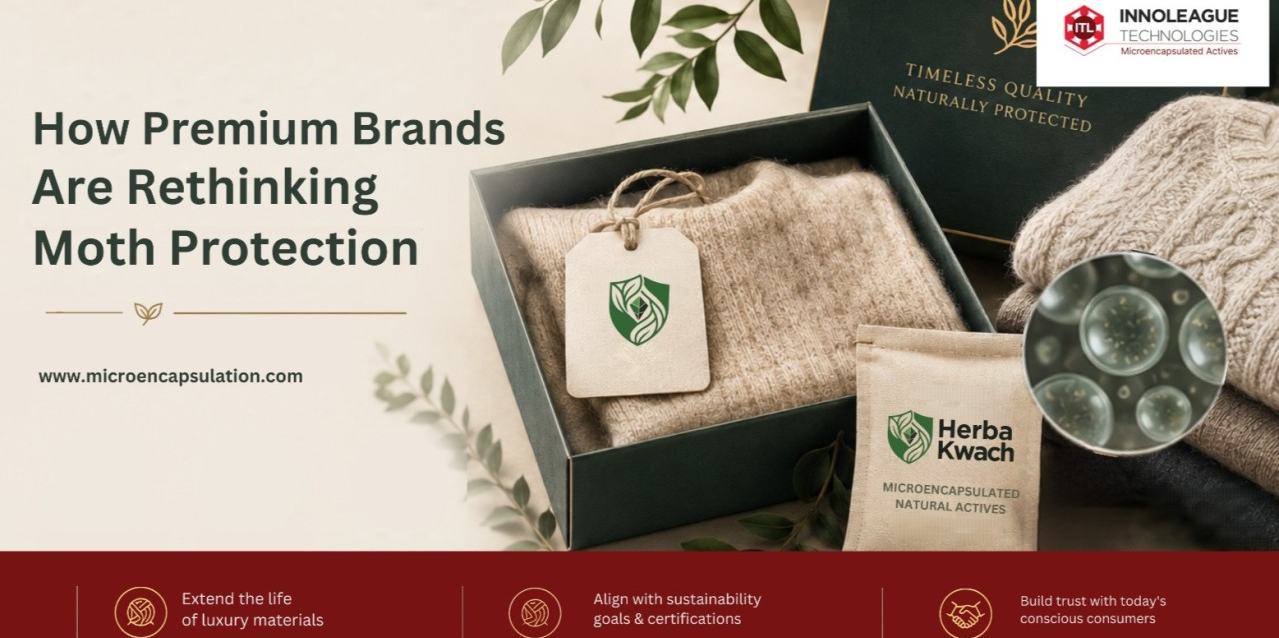
Luxury and premium brands often lead the change in the market. They work on the quality of the product while equally bringing craftmanship to the customers. Luxury brands lay important focus on textile preservation during storage and transit.
Conventionally, moth proofing was carried out using naphthalene or paradichlorobenzene. Although these harsh chemicals do deliver the required, however with increasing buzz around sustainability, health safety, traceability, and material purity. Premium brands often align their positioning to stay relevant and give quality product to the customers.
Customer is called the King in the market and he drives the product quality and appearance to some extent. The wool products are no such exception to it. When over 60% of luxury consumers consider sustainability a key purchase driver (State of Fashion reports, 2023–2025), choosing a chemical product for moth proofing does present a conflict.
Chemical repellents → effective but misaligned with “natural luxury”
Sustainability narratives → demand low-toxicity, eco-conscious inputs
This concern of fibre fragility has been taken sincerely by International Wool Textile Organization, where they warn that chemical exposure can degrade protein-based fibers. Loro Piana has been prioritizing preservation of rare fibers like cashmere and vicuna via controlled storage environment and minimum chemical usage.
Luxury brands like Brunello Cucinelli, Canada Goose, and Kering have been putting some serious efforts to integrate sustainability into their operations and production, including packaging and storage systems by actively avoiding harsh chemical treatments.
This has led to increased adoption of microencapsulated herbal repellents and similar solutions. Microencapsulation gradually releases the active compounds in the environment enhancing the protection against moths. Innoleague Technologies is a trusted name for such formulations and application ready products. Such solutions offer the following functional properties:
- Invisibility: No visible residue or staining
- Odor control: Neutral or subtle scent profiles
- Material safety: Compatible with protein fibers (wool, cashmere, silk)
- Scalability: Integrates into packaging inserts, linings, or storage environments
The Ellen MacArthur Foundation stresses that sustainable production should be practiced across the entire value chain, rather than final finishing strategy to gain brownie points from the customer. As the purchasing power of the customer is increasing, premium market has become equally competitive and value-driven. Even a small change in the processing like eco-friendly moth protection contributed heavily to material longevity, sustainability credibility, and wins customer trust to enforce brand positioning.
Once a functional consideration, eco-friendly moth proofing is becoming a differentiator in the market, and this is being brought to reality by the ITL. We are there to fuel your journey of sustainable processing of wool products.