


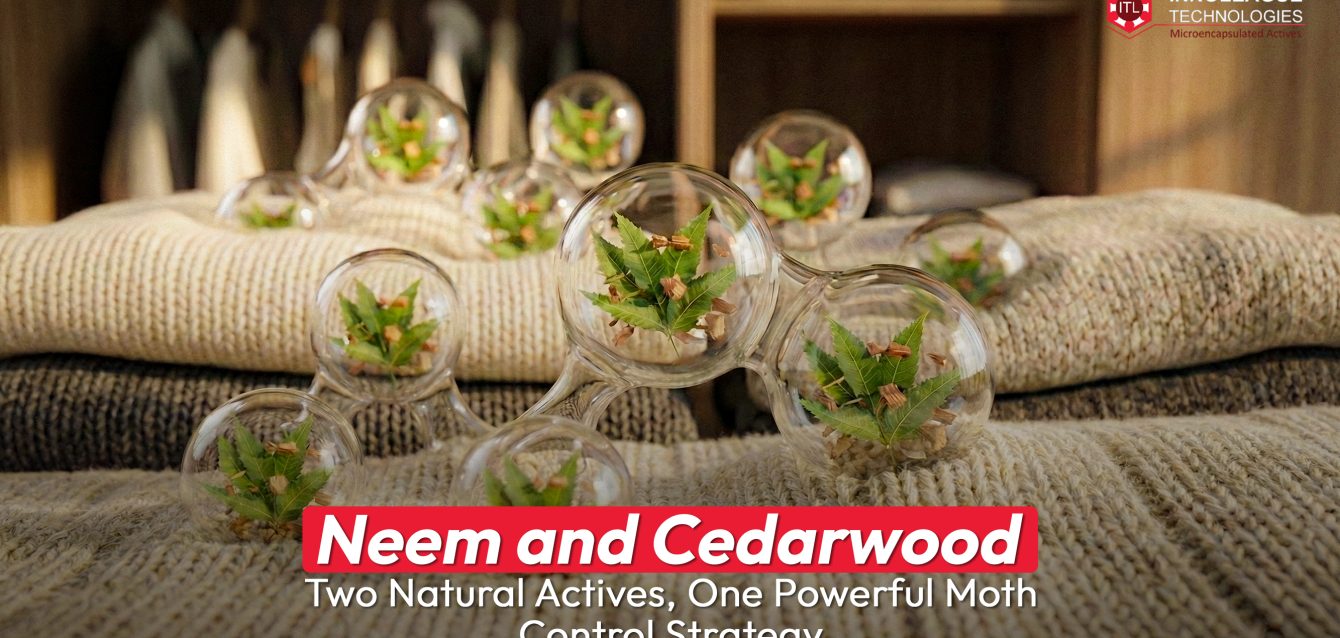
In an era where sustainability and efficacy are highly valued, plant-based pest management techniques are gaining favour. Among these, neem and cedarwood essential oils stand out for their complementary insect-repellent characteristics, providing a natural, environmentally acceptable alternative to synthetic moth control…
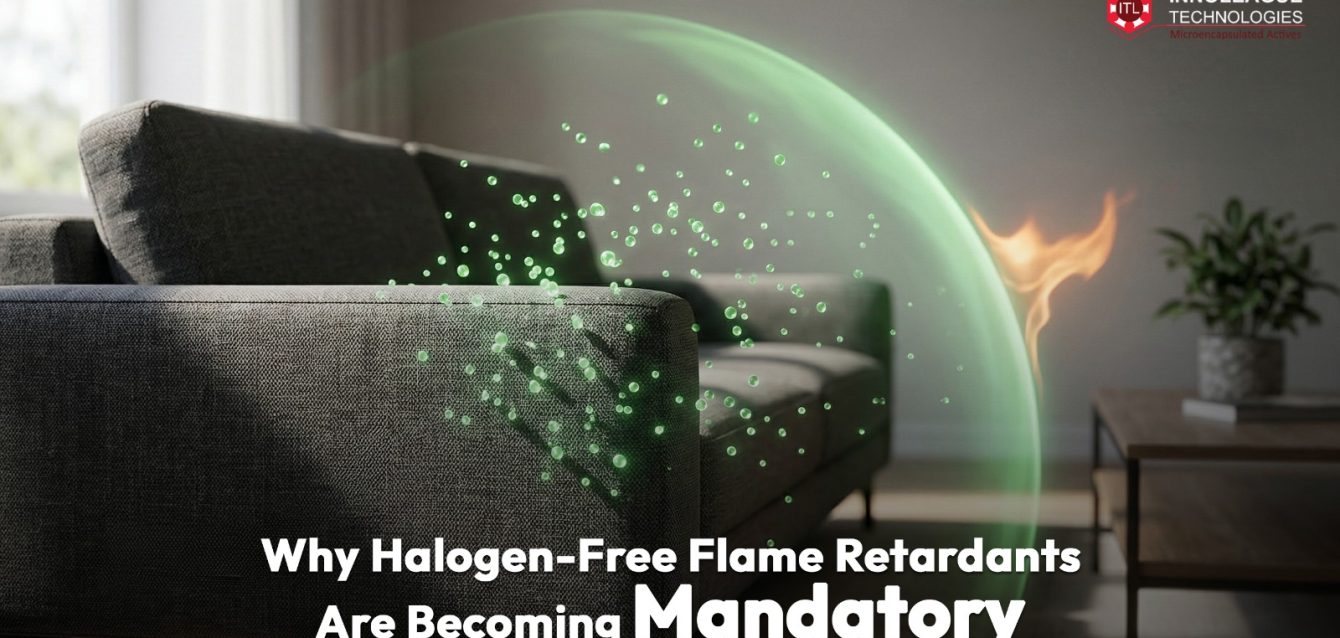
Why Halogen-Free Flame Retardants Are Becoming Mandatory (And How Microencapsulation Helps)
For many years, halogenated flame retardants containing bromine or chlorine were widely used to prevent fire damage in furniture, textiles, plastics, and electronics. While effective, these chemicals raised serious environmental and health concerns due to their persistence and potential toxicity. Today,…
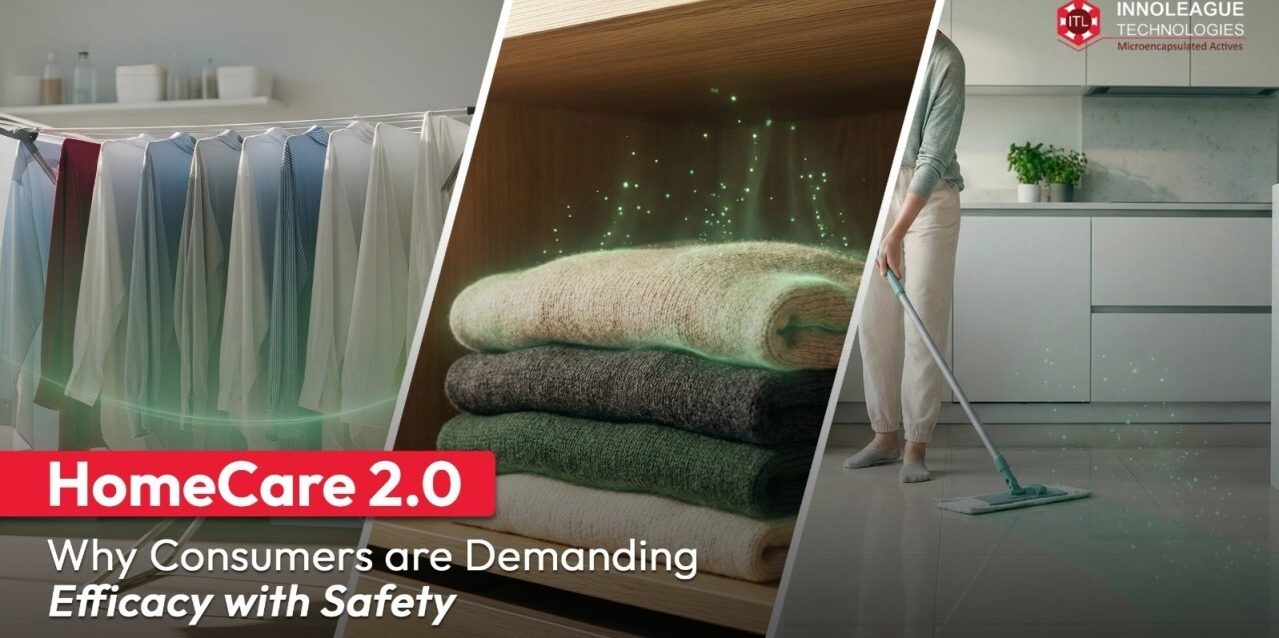
“HomeCare 2.0”: Why Consumers are Demanding Efficacy with Safety (And How Encapsulation Delivers Both)
The home care industry is changing fast. Today’s customers do not buy products just because they smell strong or come in bright packaging. Welcome to the new era of HomeCare 2.0. Modern consumers are informed and careful. They read ingredient labels….
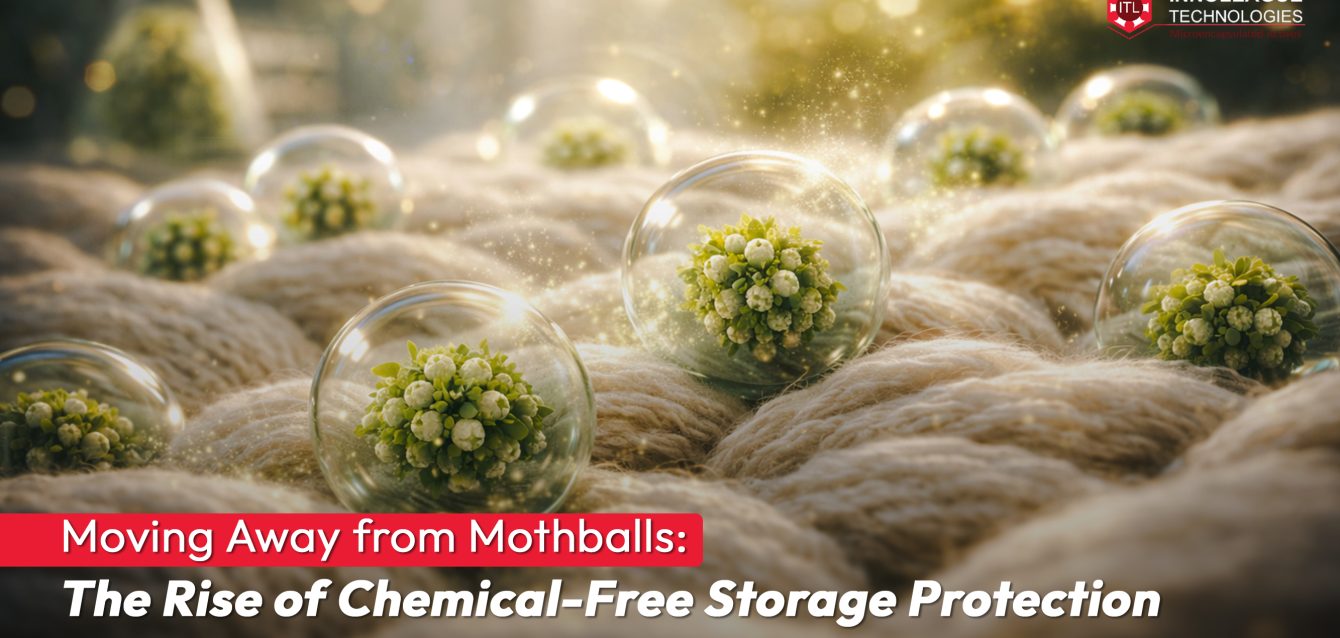
Moving Away from Mothballs: The Rise of Chemical-Free Storage Protection
For decades, traditional mothballs have been the go-to method for preserving textiles and stored goods against fabric pests. While effective, traditional mothballs use toxic compounds like naphthalene or paradichlorobenzene, which emit poisonous vapors into confined spaces. These vapors offer recognized threats…
A Strategic Collaboration for the Future of Wool
The signing of a Memorandum of Understanding (MOU) between the Wool Research Association (WRA) and Innoleague Technologies India Private Limited (ITIPL) represents a watershed moment in India’s wool and technical textiles sector. This MoU, which was formalised during WRA’s 60th AGM…
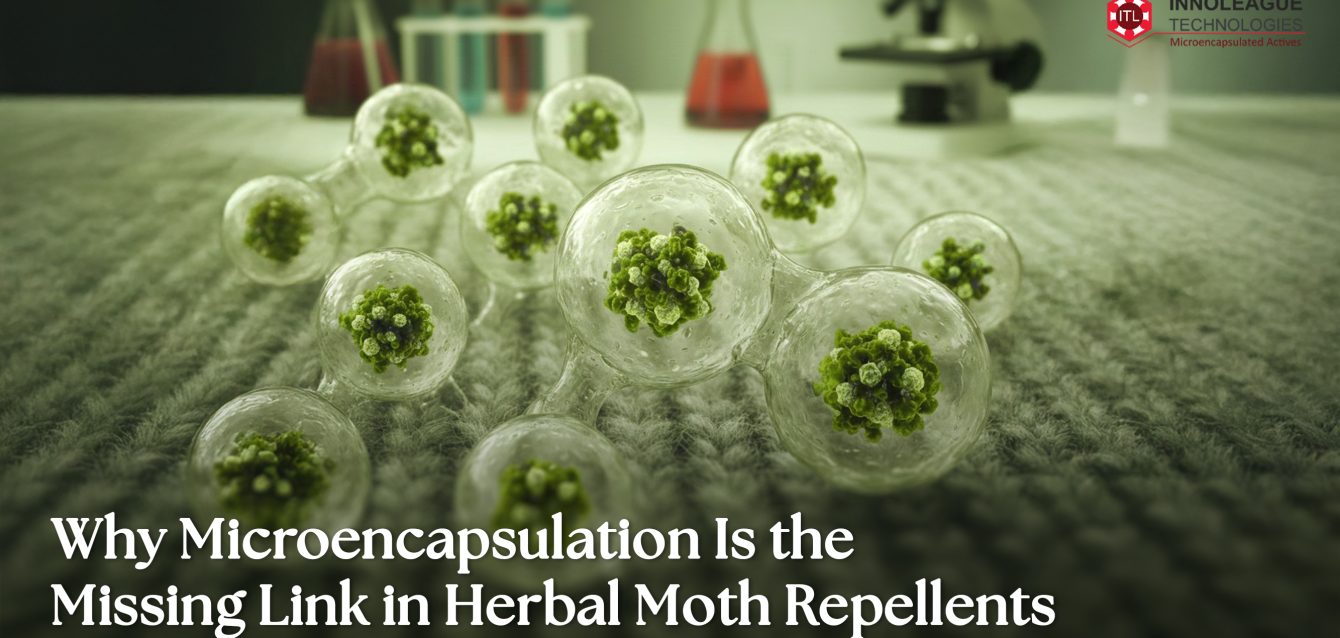
Why Microencapsulation Is the Missing Link in Herbal Moth Repellents
Herbal moth repellents have been promoted as safer alternatives to typical chemical treatments. Entomological and botanical research have shown that neem, cedarwood, and other plant-based actives have natural insect repellent properties. However, herbal repellents have always had one key disadvantage in…

Microencapsulation Based Smart Textiles
Microencapsulation is all about building intelligence into everyday chemicals thus giving better protection, better efficacy or better environmental release. It is like building artifical intelligence algorithms into chemicals using scientific and physical principles Purpose of Microencapsulation is material manipulation in defined ways Microencapsulation is a technique…

Bio-Degradable Polymers
Bio-degradable polymers in microencapsulation is a new phenomenon. While modified Starches like octinyl succnic modified starches have been common in food, flavour and fragrance encapsulation, modified cellulosics are common in pharmaceuticals controlled release. One problem with Cellulosics has been solvent residues…