


For many years, halogenated flame retardants containing bromine or chlorine were widely used to prevent fire damage in furniture, textiles, plastics, and electronics. While effective, these chemicals raised serious environmental and health concerns due to their persistence and potential toxicity.
Today, growing regulatory pressure and public awareness are pushing industries toward safer alternatives. Governments worldwide are tightening restrictions on chemicals that accumulate in the environment or the human body. As part of this shift, many halogenated flame retardants are being limited or banned, making halogen-free flame retardants increasingly necessary for manufacturers.
However, replacing traditional flame retardants is not simple. Halogen-free compounds—typically based on phosphorus, nitrogen, or mineral systems—are safer but often face durability challenges. In textiles, they may wash out during laundering. In coatings and plastics, they can leach out or affect material performance.
Microencapsulation: The Key Innovation
Microencapsulation solves this challenge by enclosing the flame-retardant compound inside microscopic polymer shells.
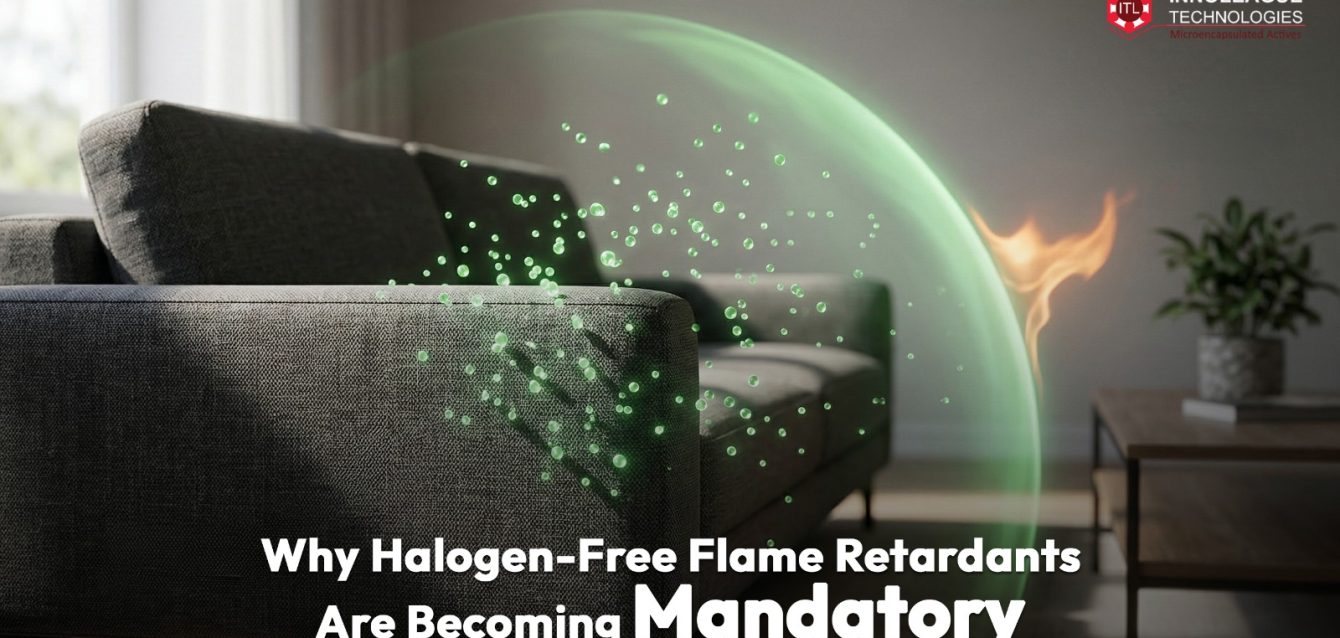
These protective capsules shield the active ingredient from moisture, detergents, UV exposure, and environmental degradation during normal use. When exposed to high temperatures during a fire, the shell breaks down and releases the flame-retardant agent precisely when it is needed.
This triggered release mechanism ensures long-lasting protection without compromising the material’s performance.
Practical Applications
Encapsulated flame retardants can be used across many industries, including:
- Textiles and upholstery requiring wash-durable fire protection
- Paints and coatings for long-term flame resistance
- Industrial fabrics and timber coatings exposed to harsh environments
- Plastics and electronics through masterbatch formulations for consistent distribution
Why Microencapsulation Matters
Microencapsulation offers several advantages:
- Improved durability – protects flame retardants from wash-out and degradation
- On-demand performance – releases active agents only during fire exposure
- Better material compatibility – reduces interference with polymers and coatings
- Regulatory compliance – supports halogen-free, environmentally safer formulations
- Sustainability – many systems are water-based and low in VOCs
The Future of Fire Protection
The global phase-out of PFAS and halogenated chemicals is driving a permanent shift toward safer fire protection technologies. Microencapsulation enables manufacturers to maintain high fire safety standards while adopting environmentally responsible materials.
In the future, fire protection will rely not on harsher chemicals, but on smarter technologies that deliver safer flame-retardant systems more effectively.