

Efficiency, for decades, was measured by functional value rather than what gets left behind. However, times have changed, and now every product, every finish is weighed on its environmental impact. So now, today, effectiveness doesn’t only mean functionality and performance, but also environmental accountability and low toxicity. The pest control industry has experienced a paradigm shift, claiming that next-gen moth control is not harsh chemicals but natural solutions.
This shift focuses on interruption, i.e. rather than relying on toxic load, the novel approach leverages behavioural science. Rather than eliminating the moths, herbal repellents disrupt moth activity by olfactory signals and habitat interference. However, this is not just enough; the volatility of the herbal products has limited their application. The technological breakthrough lies in the delivery system of the plant-based bioactive compounds.
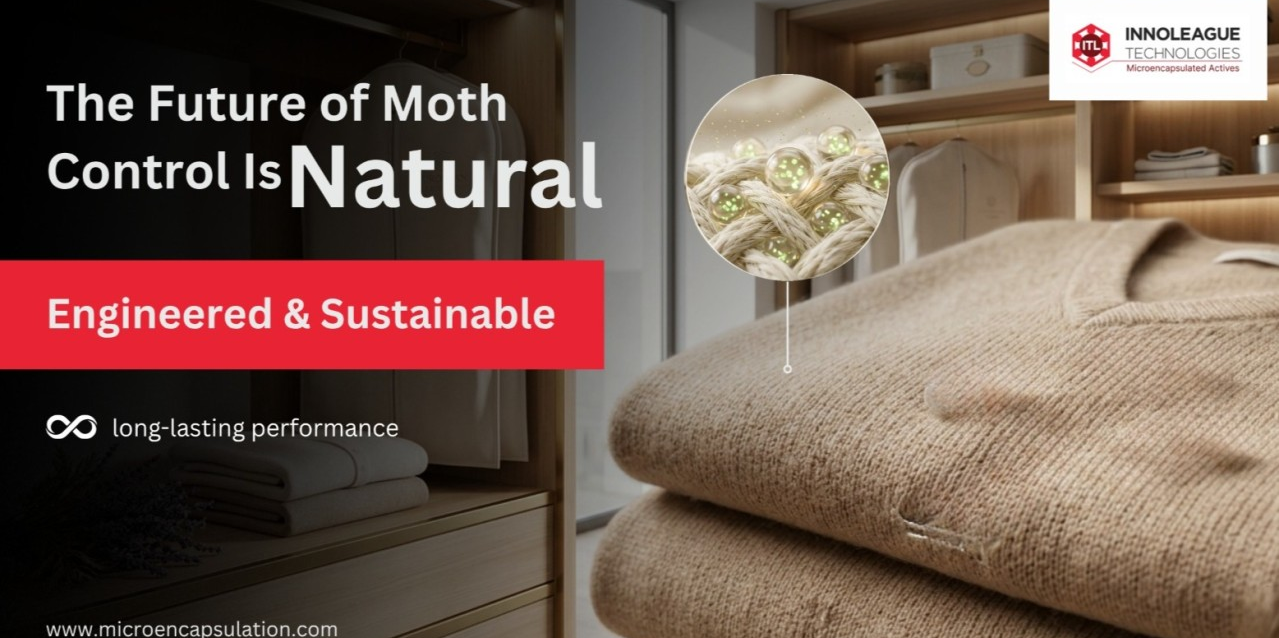
Microencapsulation enables targeted delivery of herbal repellents by enclosing bioactive components in engineered microcapsules. This technology renders control over when, where, and how the bioactive compounds will be released. It delivers precision in delivery, ingredient safety, and durability in function, resulting in a system where a natural product is reliable and consistent.
Sustainability, once an optional element, now forms the major element of design and product manufacturing. On one side, governments and regulatory bodies are coming up with stringent norms, and the customers are equally conscious of their purchases. This sandwich approach is accelerating the adoption of circular manufacturing, green chemistry principles, and low environmental-impact solutions. Microencapsulated herbal repellents are a safe juncture of such approaches, making the moth-proofing process sustainable without compromising performance.
The combination of environmental regulations, technological advancements, and market demand is creating a clear path for microencapsulated herbal repellents. Microencapsulated formulations from ITL allow manufacturers to deliver finished products that are safer for the environment and commercially viable.
Today, maybe seems a bit early to adopt microencapsulation for pest control, but it is also a leap to see and move beyond incremental improvements. Microencapsulation engineers fundamentally better solutions, guaranteeing user safety, par performance, and environmental consciousness.
We, at ITL, are eager to share our expertise and walk a mile towards a sustainable future with organisations that are willing to invest in an advanced delivery system to differentiate their product range and align with the long-term goal of environmentally safe products.
The future lies with those who don’t just work hard but act smart. And the intelligent engineering of microcapsules will unlock the potential of natural compounds, so that sustainability sets the tone.